
Best Metal Gear Servo Motor Picks for 2027
Published October 31, 2026
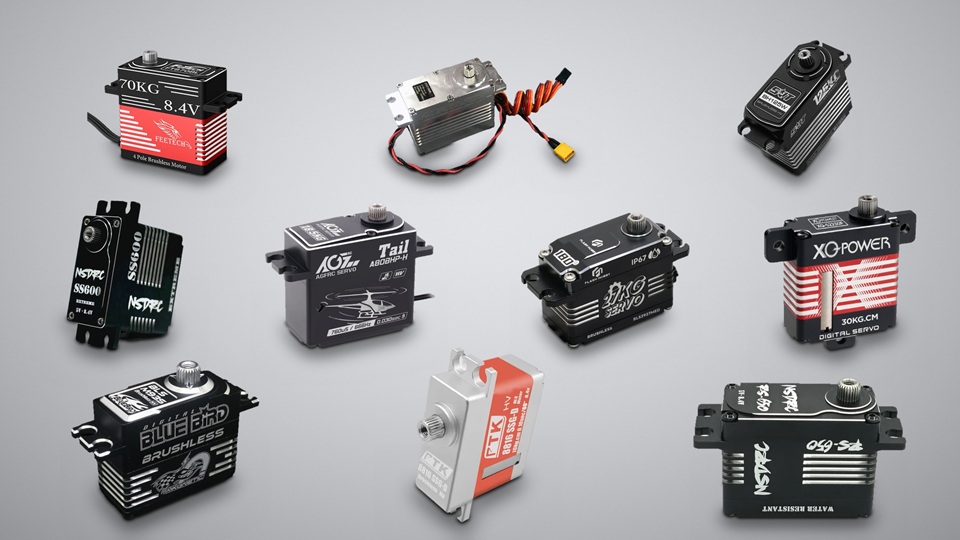
How We Picked the Winners
We wanted a fair comparison, so we filtered the database in steps.
One winner per segment. There are 10 segments, which split servos by size or application. A high torque servo and a high speed servo meet different needs, so they are not ranked against each other.
Active servos only. Discontinued servos were excluded...obviously.
Metal gear train only. The gear material had to be a metal: titanium, stainless steel, steel, aluminum, copper, brass, or a combination of these. Servos with hybrid, plastic, nylon, Karbonite or carbon gears were excluded. Where the database lists only "Metal," we cannot tell which metal it is, so those servos ranked last on gear material.
8.4V only. Every candidate had to list torque and speed at 8.4V and support 8.4V. A fully charged 2S LiPo battery is 8.4V, it is a common power source, and makers publish figures at 4.8V, 6.0V, 7.4V and 8.4V. The same servo can gain a lot of torque as voltage rises. Across the 973 servos in the database that list both, the median gain from 6.0V to 8.4V is about 35%. Rating everything at one voltage makes the comparison practical. All torque and speed figures here are at 8.4V, in oz-in and sec/60°.
Segments. We defined them by the database's size class:
- Micro: the Micro, Mini and Nano classes combined.
- Standard.
- Giant.
- Low Profile.
- Slim/Wing: the Slim class.
- Helicopter Tail: a servo built for tail use, meaning a 760 µs neutral pulse and a 560 Hz or higher frame rate. Tail servos compete only in this segment, so they cannot win Micro or Standard.
Performance first, then gear material. For each segment we found the leader on its metric: highest torque for High Torque, fastest speed for High Speed. Servos within 15% of the leader form a shortlist. For High Speed, only servos at or above the segment's median torque were considered, so a weak servo cannot win on speed alone. We then ranked the shortlist by gear material, strongest first, and the best performer in the top material won. That means some winners give up a little performance for a better gear material.
Gear material order. Titanium, then titanium / steel, then titanium / aluminum, then stainless steel, then steel, then copper and brass, then aluminum, then unspecified "Metal." Titanium ranks first because it is the premium gear material in hobby servos. It has an excellent strength-to-weight ratio and corrosion resistance. It is not "the strongest metal." Hardened steels can be stronger in absolute terms, and titanium's advantage is strength per unit of weight.
What we did not consider. Price was not a factor.
So, without further ado, here are our top picks for metal gear servo motors.
Micro High Torque: PTK 8816SSG-D
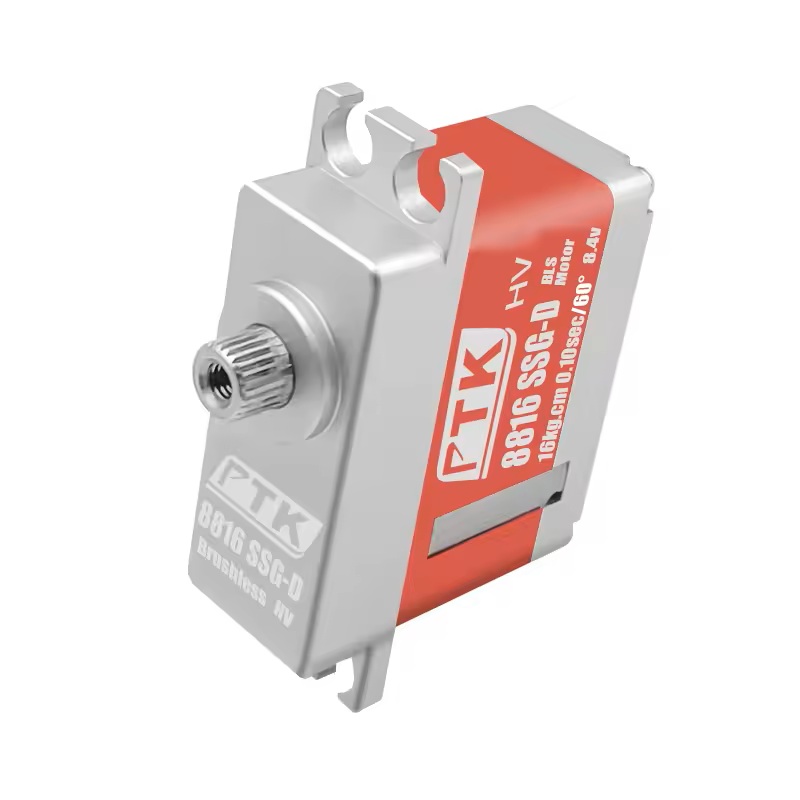
Best applications: 1/18 and 1/24 crawlers, small FPV wings and micro helicopter cyclic control where torque matters.
Why it wins: This brushless Mini-class servo delivers 361.07 oz-in at 0.10 sec/60° and weighs 45.6 g. It ranks third of 265 for torque in its segment. Stainless gears resist rust, which suits wet and dirty crawling. It has two bearings and is programmable.
Limitation: It is on the heavier end of 491 comparable servos.
Make: PTK
Stall Current: (add)
Shaft Power: 1.50–4.11 W
Weight: 1.48 oz42.0 g
Micro High Speed: Blue Bird BLS-M93S
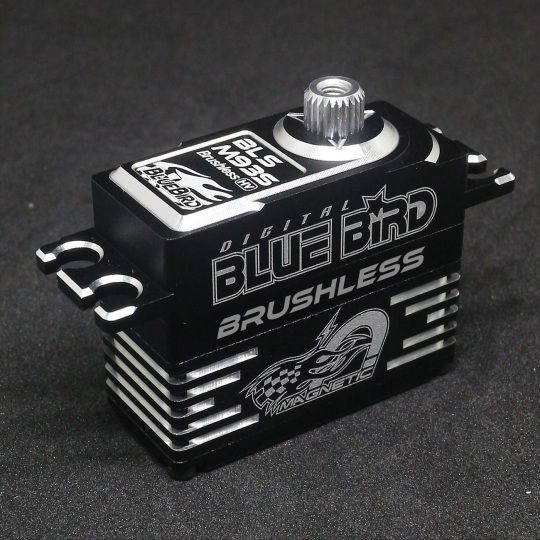
Best applications: Micro helicopter cyclic, small aerobatic planes and 1/24 racers.
Why it wins: The BLS-M93S moves at 0.040 sec/60° with 181.9 oz-in, in a 35.5 g brushless body with an aluminum case. It ranks seventh of 265 for speed. It ties for the fastest speed among Micro servos at or above the median torque, and it has the most torque of that group. It has a hall-effect sensor and two bearings.
Limitation: The exact gear metal is unknown but it beats comparable servos on performance. If you want a documented titanium gear train, you can take the Torq TCM-1022 (200 oz-in, 0.055 sec/60°, 22 g) and accept less speed.
Make: Blue Bird
Stall Current: (add)
Shaft Power: 3.98–8.41 W
Weight: 1.25 oz35.5 g
Standard High Torque: Feetech FT870B
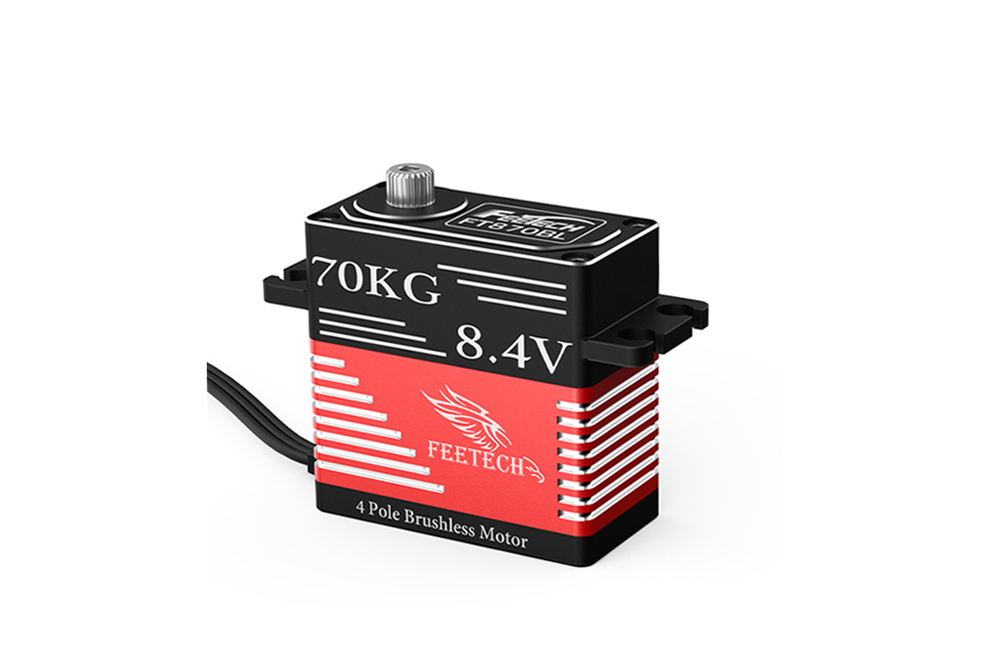
Best applications: 1/10 rock crawlers, scale trucks and heavy-duty steering.
Why it wins: This brushless Standard servo makes 1041.75 oz-in at 0.142 sec/60° and weighs 78.8 g. It ranks tenth of 442 for torque. It is the only titanium servo within 15% of the segment's torque leader, so it wins on gear material while staying close to the top on torque. Titanium gears keep weight down and resist corrosion, which helps crawlers that get wet. It has an aluminum case and a 6.0-9.0V range.
Limitation: It is slow (410th of 442 for speed), has a single bearing, and its water rating, programmability and price are not listed. Use it for slow, heavy work, not racing.
Make: Feetech
Stall Current: 7.2–7.8 A7200–7800 mA
Shaft Power: 10.78–13.56 W
Weight: 2.78 oz78.8 g
Standard High Speed: NSDRC SS600
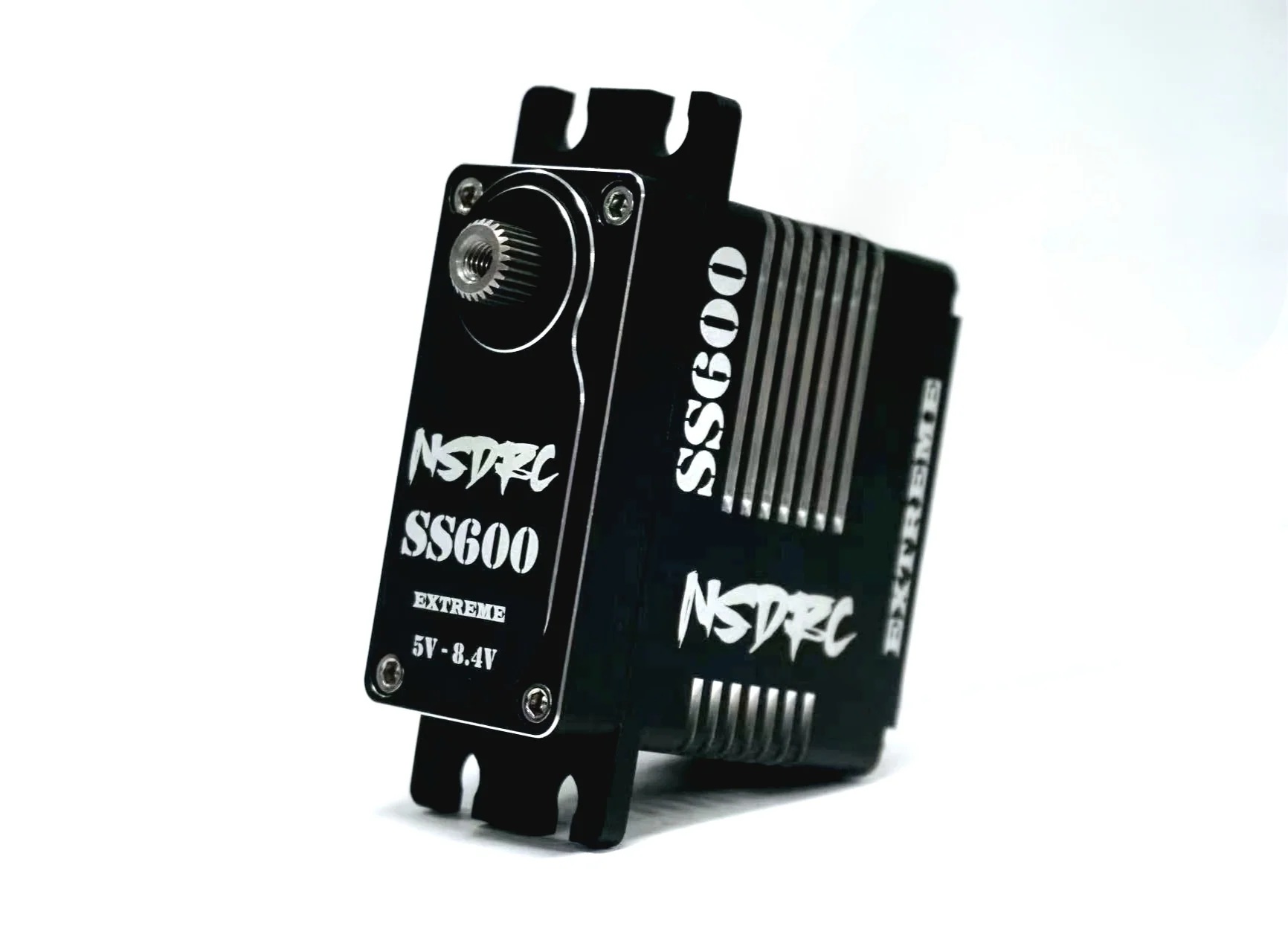
Best applications: 1/10 and 1/8 on-road and drift steering, 1/8 buggy and truggy steering, and sport or 3D plane control surfaces.
Why it wins: The SS600 turns 0.040 sec/60° with 687 oz-in. It is rated IP66, weighs 91.5 g and has two bearings. It ranks 28th of 442 for speed and 96th for torque. It is the fastest Standard servo at or above the median torque, and it has stainless steel gears, which suit wet or dirty use.
Limitation: It is heavy for a fast servo, and its unclear if it's programmable.
Make: NSDRC
Stall Current: 3.1–4.3 A3100–4300 mA
Shaft Power: 15.78–31.76 W
Weight: 3.23 oz91.5 g
Giant High Torque: ProModeler DS2180BLDP
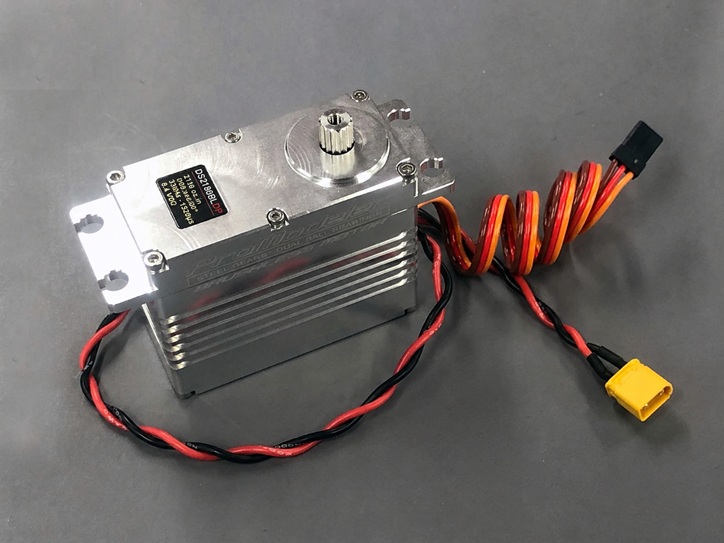
Best applications: 1/5 scale cars, large crawlers and rock bouncers, and giant-scale aerobatic planes.
Why it wins: The DS2180BLDP produces 2180 oz-in at 0.126 sec/60° and weighs 280 g. It ranks first of 31 for torque and 11th for speed. No other giant servo falls within 15% of it, so gear material could not change the result. Its steel gears handle heavy shock, and the case is aluminum and water resistant. For readers who prefer stainless gears and more speed, the SRT BH125W (stainless steel, 1735.9 oz-in, 0.085 sec/60°) is the better choice.
Limitation: It is heavy, slow and not programmable.
Make: Promodeler
Stall Current: 9–15.2 A9000–15200 mA
Shaft Power: —
Weight: 9.88 oz280.0 g
Giant High Speed: SRT BH125W
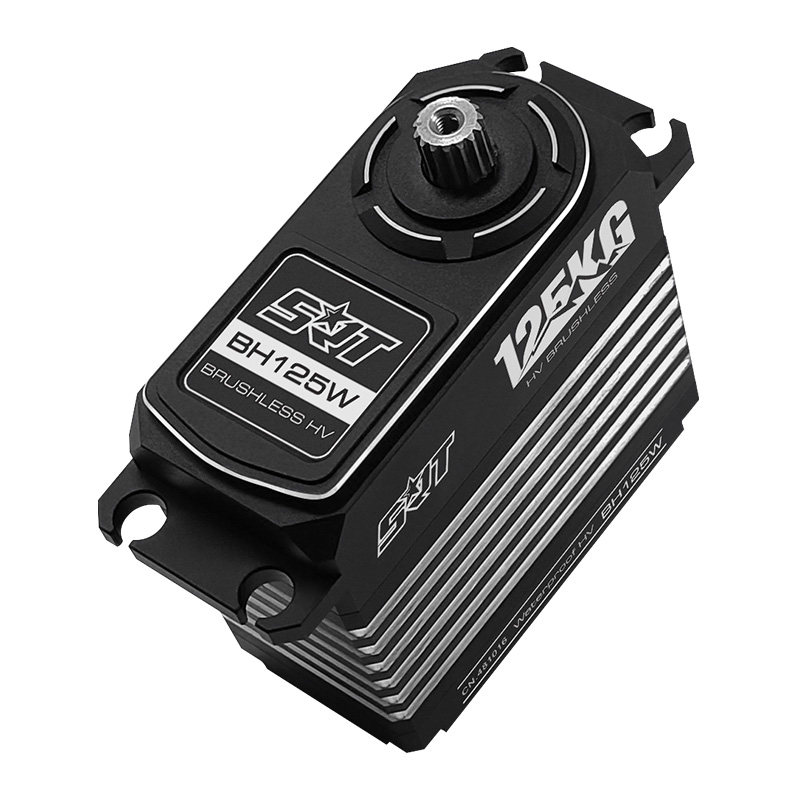
Best applications: Giant-scale planes, 1/5 and 1/6 scale surface vehicles, and large buggies where steering speed counts.
Why it wins: The BH125W makes 1735.9 oz-in at 0.085 sec/60° and weighs 209 g. It ranks second of 31 for torque and third for speed. It is the fastest giant servo at or above the median torque. Stainless steel gears and a waterproof rating make it a good fit for muddy or wet vehicles, and it uses two bearings.
Limitation: At 209 g it is still heavy for aircraft that count every gram.
Make: SRT
Stall Current: 9.4–13 A9400–13000 mA
Shaft Power: 19.26–37.76 W
Weight: 7.37 oz209.0 g
Low Profile High Torque: NSDRC RS650
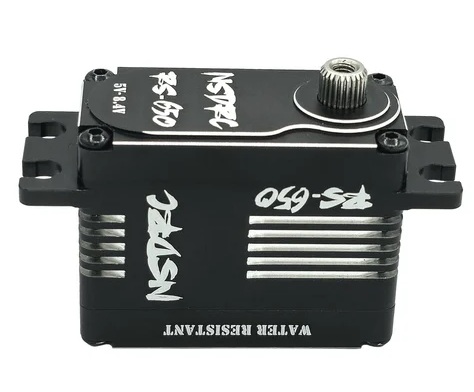
Best applications: Low-profile steering in scale crawlers, cars with tight chassis clearance, and low-slung drift and touring builds.
Why it wins: The RS650 produces 940 oz-in at 0.090 sec/60° and weighs 71 g. It ranks first of 115 for torque and 97th for speed. It is the strongest low-profile servo, and no other servo within 15% of it has a stronger gear material. Stainless steel gears and an IP66 rating suit wet, dirty running. It has an aluminum case and two bearings.
Limitation: It is slow, so it does not suit racing. For speed, see the Flash Hobby BLS2927MED below.
Make: NSDRC
Stall Current: 5.4–8.8 A5400–8800 mA
Shaft Power: 10.03–19.31 W
Weight: 2.50 oz71.0 g
Low Profile High Speed: Flash Hobby BLS2927MED
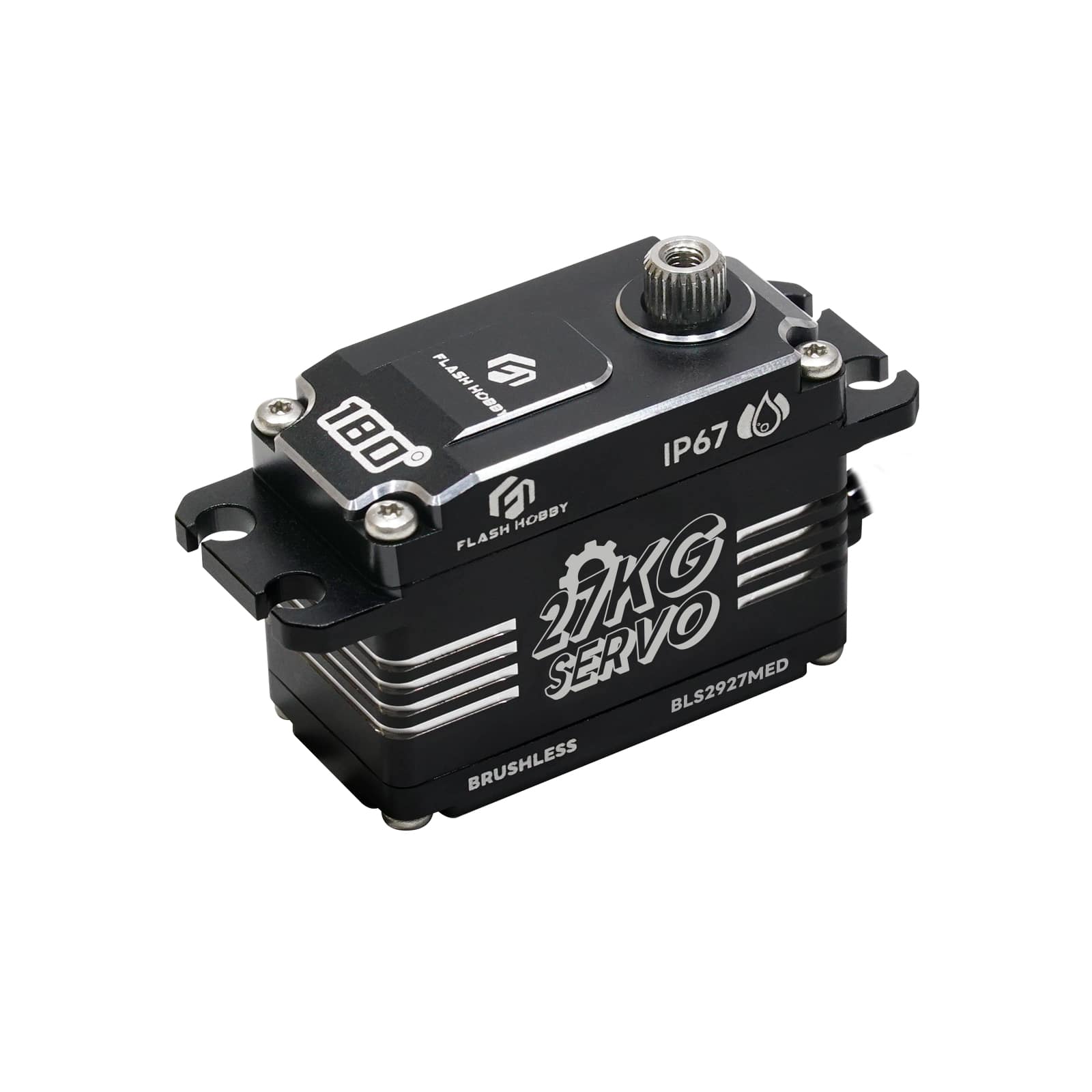
Best applications: 1/10 on-road and drift steering, competition cars, and thin-fuselage control surfaces.
Why it wins: The BLS2927MED turns 0.030 sec/60° with 375 oz-in, at 71 g. It ranks first of 115 for speed and 34th for torque. It is the fastest low-profile servo and first in our speed shortlist. Its steel gears handle shocks, and the waterproof case, magnetic encoder and programmable controller add flexibility. It is a brushless design with two bearings.
Limitation: There are other servos with slightly stronger gears but the tradeoff is performance.
Make: Flash Hobby
Stall Current: 4.5–6 A4500–6000 mA
Shaft Power: 8.83–23.11 W
Weight: 2.50 oz71.0 g
Helicopter Tail: AGFRC A80BHP-H
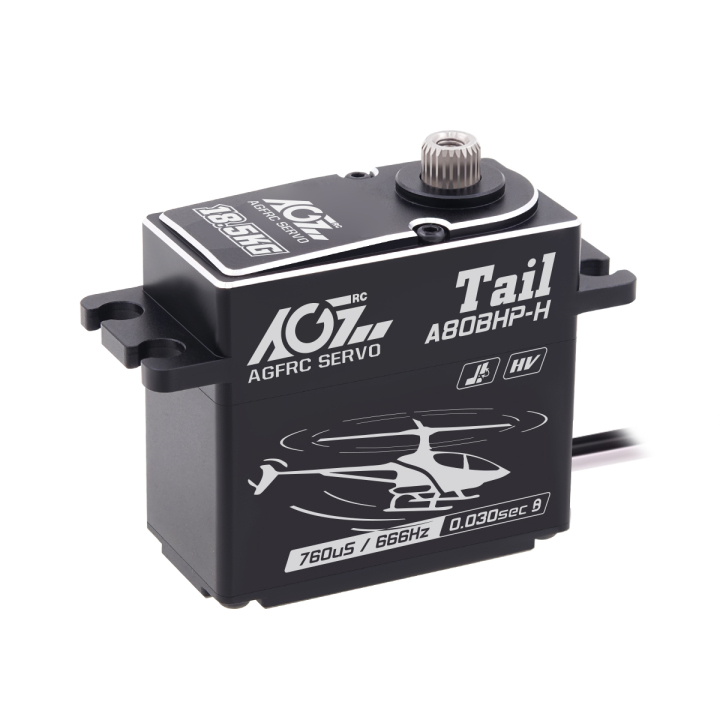
Best applications: Mid to large class 3D helicopters (roughly 500 to 700) on flybarless setups.
Why it wins: The A80BHP-H turns 0.030 sec/60° with 256.92 oz-in, at 79 g, and runs at 666 Hz with a 760 µs neutral. It ranks second of 44 for speed and 19th for torque. It ties for the fastest speed in the shortlist but is the only servo there with a titanium / steel gear train that is also programmable and built with 3 bearings. Titanium keeps weight low at the end of the tail boom.
Limitation: It needs a gyro or flybarless controller that supports 666 Hz and a 760 µs neutral, and 8.4V is the top of its range. Tail servos need very fast response, strong holding power, a precise center and fine resolution. A mismatched gyro frame rate can cause poor performance or, with some servos, damage.
Make: AGFRC
Stall Current: (add)
Shaft Power: 6.85–15.83 W
Weight: 2.79 oz79.0 g
Slim/Wing: XQ-Power XQ-S2230F
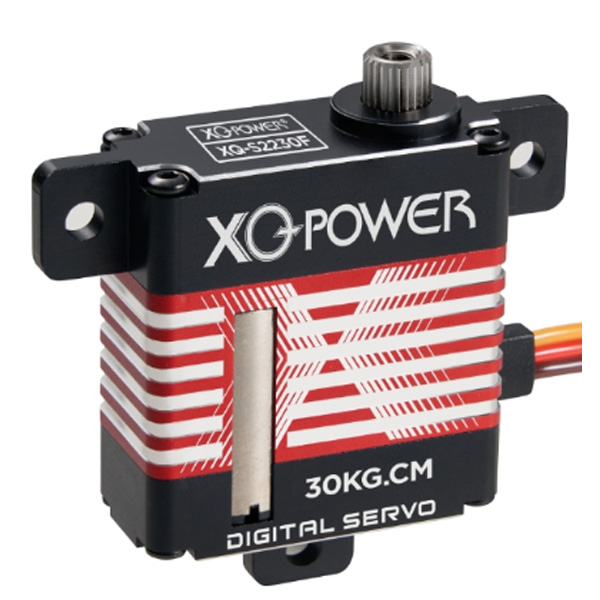
Best applications: FPV wings, foam flying wings, scale aircraft with thin wing bays, and flaps and ailerons that need holding power.
Why it wins: The XQ-S2230F makes 445 oz-in at 0.090 sec/60° and weighs 48 g. It ranks first of 24 for torque and 13th for speed, and it has the best torque-to-speed ratio in the Slim class. Stainless steel gears resist rust, and a splashproof rating helps in damp conditions. It is a coreless digital servo with two bearings, and its thin dimension is 0.59 in (about 15 mm).
Limitation: At 48 g it is heavy for a wing servo, and programmability is unknown.
Make: XQ-Power
Stall Current: 4–5 A4000–5000 mA
Shaft Power: 4.70–9.14 W
Weight: 1.69 oz48.0 g
Why The Gear Material Matters
Trading speed for torque. Picture a small gear turning a large gear. The small gear must spin many times to turn the large gear once. The big gear turns slowly but pushes with more force. A servo chains several of these pairs together. The motor and its small pinion turn fast, and the last gear on the output shaft turns slowly with a lot of torque. This is the same trade you make on a bicycle when you shift into a low gear to climb a hill.
Why gears fail. The last gears in the train carry the most force, so they fail first. There are three common failures:
- Stripping. A sudden shock, such as a crash, a rock strike or a hard landing, puts a spike of force on a few teeth. The teeth shear off.
- Wear. Teeth slowly lose material through repeated loading and dirt. Slop (backlash). As teeth wear, the gaps between them widen. The shaft wobbles and the servo loses its centering.
Common gear materials. Each material has trade-offs.
- Plastic and nylon: cheap, light and quiet, but the weakest. They often strip before the linkage does.
- Aluminum: light, but softer than steel, so it wears faster.
- Brass and copper: softer than steel and heavier than aluminum.
- Steel: strong and hard. Plain steel can rust, so it needs a coating.
- Stainless steel: strong and resists rust, which helps in wet use.
- Titanium: a strong, light and corrosion resistant gear material. Ti-6Al-4V has a specific strength of about 199 kN·m/kg versus about 131 for 4340 steel , and titanium gear sets lower servo weight and improve wear , but they cost more.
Titanium is not stronger than every steel. Ti-6Al-4V can be 10-30% weaker than typical aerospace steels , and its advantage is strength for the weight. That is why we rank it first among metals, not because it is the strongest in absolute terms.
Metal is not the only thing that matters. Metal gears do not guarantee better positioning. Gear machining, backlash, lubrication, housing stiffness and shaft support also matter. Motor type, bearings, case and the quality of the heat treatment affect durability too. A metal gear train can also pass shock on to the next weakest point, such as the case tabs or a servo horn , so use a servo saver in high-impact vehicles.
More FAQs
Are metal gear servos worth it? Yes, if the servo will see shock, heavy loads or repeated use, such as a crawler steering, a large plane or a robot arm. For light, gentle jobs, plastic gears are cheaper and quieter. Metal costs more and adds weight.
Are metal gears better than plastic gears? For strength, yes. Plastic gears are light and cheap but strip, while metal gears are far stronger . Plastic wins on weight, noise and cost. Are titanium gears better than steel gears? Not in every way. Titanium is stronger for its weight and resists corrosion, so it suits weight-sensitive and wet use. Some steels are stronger in absolute terms , and steel is cheaper. In this guide, titanium ranked first on gear material, but only among servos with performance in the same range.