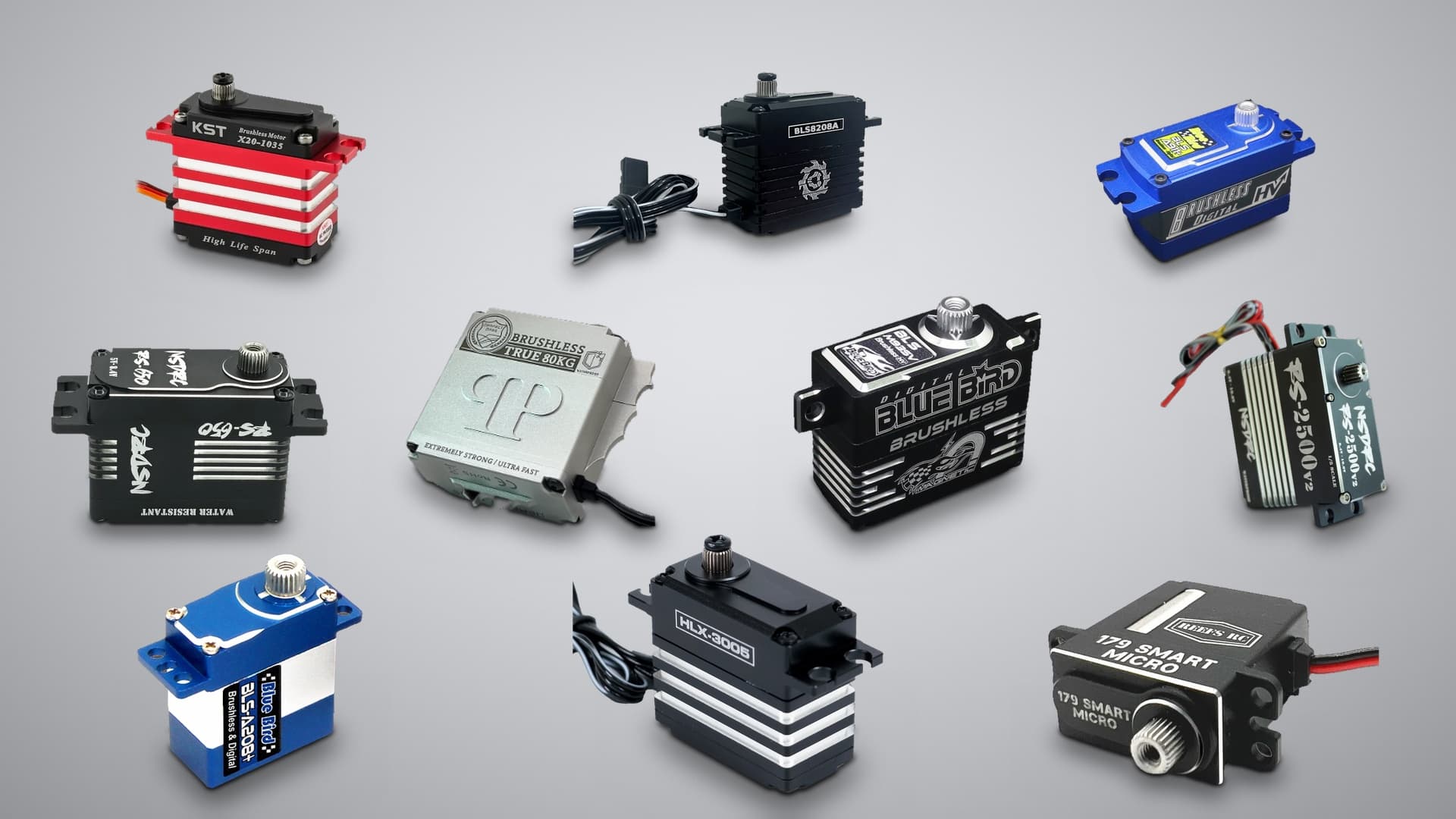
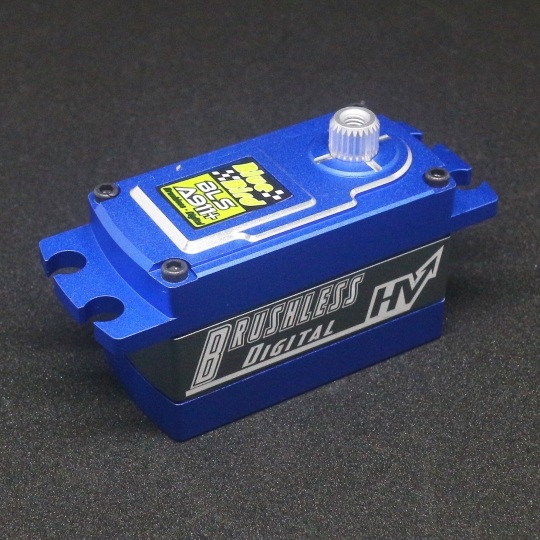
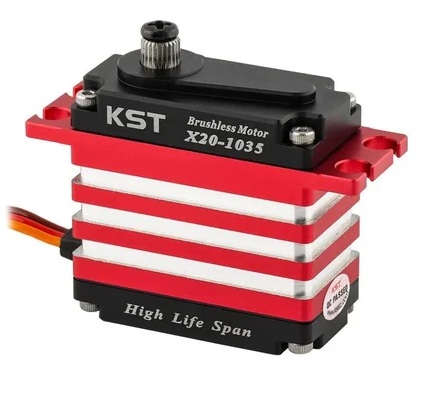
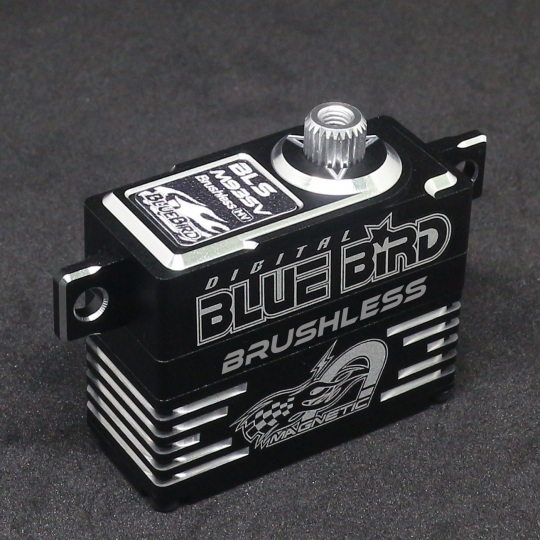
A brushless servo motor is a hobby servo whose motor is switched electronically instead of through mechanical brushes. There are nearly 850 active brushless servo motors in our database as of this writing. Trying to pick one can be a time consuming and expensive task so we've analyzed our data to help surface the best servos on the market for RC, FPV, and Robotics based on their specs so you can make the right decision.
Published October 24, 2026
What is a Brushless Servo Motor?
In a brushed motor, the coils are on the rotor and brushes touch a commutator on the rotor to deliver current to them. An electronic controller replaces the brush commutator contacts in a brushless servo, using transistors to switch current through the windings at the right angle. Because the brushes physically rub on the commutator, a brushed servo motor wears faster and needs more maintenance than a brushless servo motor.
For more details about how brushless servos work, see the How a Brushless Servo Motor Works' section below. So without further ado, here are our top choices. Happy building!
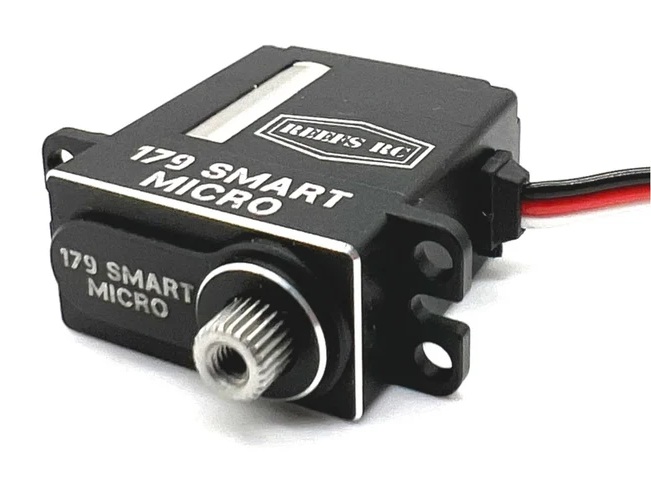
Micro High Torque: Reefs RC 179
Best applications: 1/18 and 1/24 crawlers, small FPV wings, and micro helicopter cyclic, where a small servo has to push hard.
Why it wins: It delivers 179 oz-in from a 21 g body. We rank it stronger than 99% of 301 digital micro servos, and in the top five of 300 for torque density. It has steel gearing, an aluminum case, a magnetic encoder and programmability, which is rare at this size.
Limitation: It is slower than the best micro servos, and the price is high. If speed matters more than holding power for small form factor, take a look at the next pick.
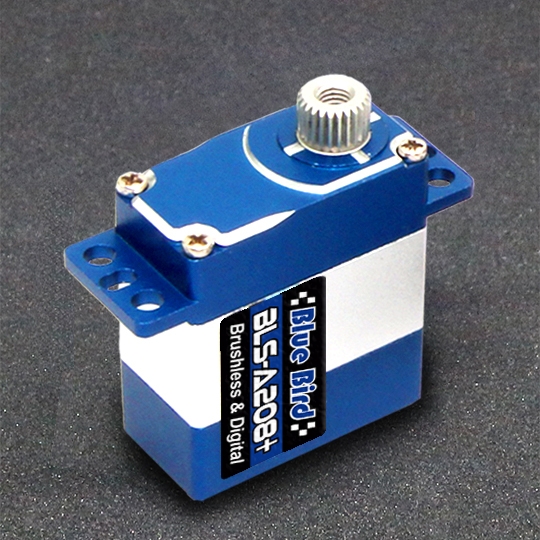
Best applications: Micro helicopter cyclic, small aerobatic planes, and 1/24 racers that need quick response.
Why it wins: It reaches 0.04 s/60° at 8.4V, with a 333 Hz refresh rate and metal gears, in a 22g package. Its 131.96 oz-in of torque is solid for the size.
Limitation: The 8.5V ceiling leaves almost no headroom over a fully charged 2S pack, so use a regulated supply. Go with the Reefs RC 179 for heavy crawler duty.
Best applications: 1/10 rock crawlers, scale trucks, and steering on heavy 1/8 buggies.
Why it wins: At 1,138.76 oz-in, it is the strongest standard-size winner here. It has a steel gear train, an aluminum case, IP65 water protection and a programmable controller. That combination suits wet, dirty, high-load surface use.
Limitation: At 0.11 s/60° it is not a fast servo. Racers and flyers should look for our high speed pick, also a Torq model.
Best applications: 1/10 and 1/8 on-road and drift steering, 1/8 buggy and truggy steering, and sport or 3D plane control surfaces.
Why it wins: It combines 444.3 oz-in with 0.04 s/60° at 8.4V. That torque is high for a servo this fast. We rank it faster than 92% of digital standard servos by speed-to-weight. It has steel gears, an aluminum case, a magnetic encoder and IP65 water protection.
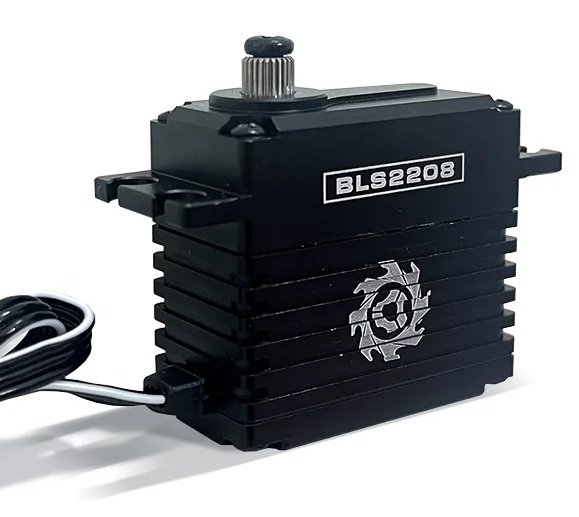
Limitation: Torque is well below the BLS8208A, so it is not the best for crawler applications.
Best applications: 1/5 scale cars, large crawlers and rock bouncers, and giant-scale aerobatic planes with big control surfaces.
Why it wins: It makes 1,520 oz-in at 8.4V and climbs to 2,650 oz-in at 16.8V. The aluminum case, steel gears and IP67 rating are what you want for sustained high loads.
Limitation: It is heavy and slow at 8.4V. Its 8.4V minimum means it cannot run on 6V. It also needs a power supply that can handle high current.
Best applications: Giant-scale planes, 1/5 and 1/6 scale surface vehicles, and large buggies where steering speed counts.
Why it wins: It combines roughly 1,110 oz-in at 8.4V with a brushless motor, an aluminum case, metal gears and a waterproof rating. Independent testers also list the Perfect Pass Monster among brushless servos for high-torque use.
Limitation: Information on its weight is not publicly available so it may be heavier than your set up can handle.
Best applications: Low-profile steering in scale crawlers, cars with tight chassis clearance, and low-slung drift and touring builds.
Why it wins: It produces 940 oz-in at 8.4V in a low-profile case that is about 1.21 in tall, with steel gears and an aluminum case. For a low-profile servo, that's an impressive amount of torque.
Limitation: It’s not a fast servo, so it’s not the best pick for racing.
Best applications: Competition gliders, wing and tail surfaces in thin fuselages, and camera gimbals on FPV or cinema drones.
Why it wins: It delivers 0.04 s/60° and 308.36 oz-in at 8.4V from a 50.4 g body, with metal gears and a 333 Hz refresh rate. That is strong torque for a servo this fast and this light. It's also reasonably priced.
Limitation: No water rating found, so keep it away from wet crawling. It lacks the torque for large control surfaces.
Best applications: 500 to 800 class 3D helicopters, flybarless setups.
Why it wins: It is the fastest servo in this list at 0.03 s/60° at 8.4V, with about 167 oz-in of torque. It has steel gears, six bearings, an aluminum case and programmability. Its 560 Hz frame rate and 760 µs neutral pulse suit modern tail gyros.
Limitation: It needs a gyro or FBL controller that supports 560 Hz and 760 µs output.
Best applications: FPV wings, foam flying wings, small scale aircraft, and thin wing bays that limit servo thickness.
Why it wins: It's 15 mm thin and weighs 35.5 g, yet it delivers 181.9 oz-in at 8.4V and 0.04 s/60°. servodatabase.com ranks the BLS-M93S more power-dense than 98% of 426 digital mini servos. It has metal gears, an aluminum case, a magnetic encoder and a 400 Hz refresh rate.
Limitation: It's not suited to giant-scale planes or surface use.
We wanted a fair comparison, so we filtered the data in steps.
One winner per segment. There are 10 segments, which split servos by size or application. A high torque servo and a high speed servo meet different needs, so they are not ranked against each other.
Active servos only. Discontinued servos were excluded.
Brushless motors only. The motor type had to be listed as brushless, 3-pole, 4-pole, or 5-pole, with metal gears and a position sensor that suits the job.
8.4V only. Every candidate had to list torque and speed at 8.4V. A fully charged 2S LiPo battery delivers 8.4V. It's a common power source and most higher tiered servos support that voltage. Rating everything at one voltage makes the comparison practical.
Segments. We defined them by the database's size class or application:
Micro: the Micro, Mini, and Nano class combined
Standard.
Giant.
Low Profile.
Slim/Wing: thin servos built for wing bays.
Helicopter Tail: a servo built for tail use, meaning a 760 µs neutral pulse and a 560 Hz or higher frame rate.
Performance first. For each segment we looked for the leader on its metric: highest torque for High Torque, fastest speed for High Speed. For High Speed, the winner also had to carry useful torque, so a weak servo cannot win on speed alone.
What else we checked. These did not decide a winner on their own, but they shaped the write-ups:
Gear material: steel or metal gears.
Aluminum case where listed.
Ball bearings.
Programmability.
Water or dust protection.
What we did not consider. Price was not a factor to fully encompass all servos.
How a Brushless Servo Motor Works
A motor turns because magnets push and pull on each other. Run electric current through a coil of wire and it becomes an electromagnet. Put that electromagnet near a permanent magnet and they attract or repel. Do that in the right order and the shaft keeps turning.
The question then is "who does the right order part?". That is what separates a brushed motor from a brushless one.
The Brushed Motor: A Mechanical Switch
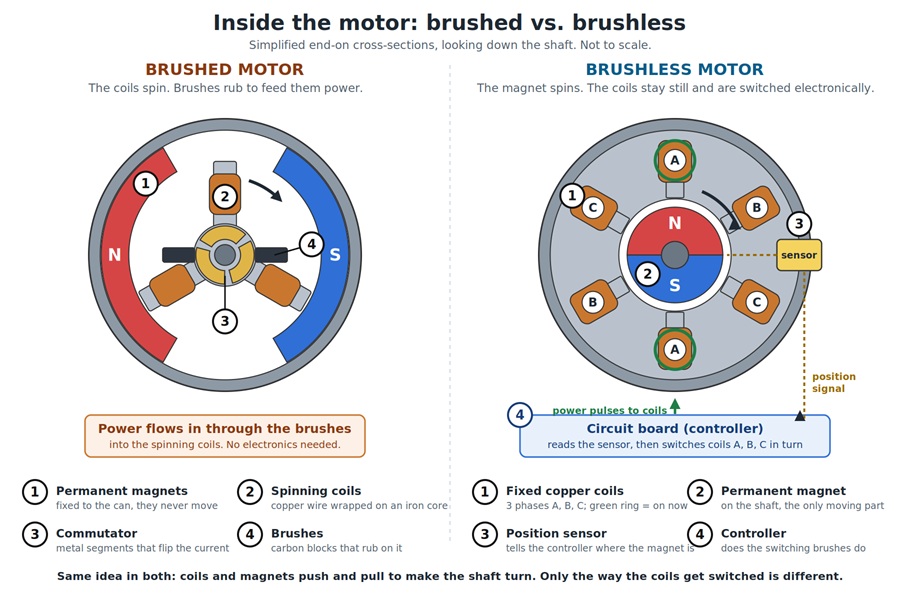
In a brushed motor, the coils are on the rotor, which is the spinning part, and brushes touch a commutator on the rotor to deliver current to them. A commutator is a cylinder made of multiple metal segments mounted on the spinning armature. As the rotor turns, the commutator segments slide past the brushes and flip the current in each coil at the right moment. The magnets are fixed around the outside.
It works, and it is cheap and simple. The catch is that the brushes physically rub on the commutator. That friction means brush wear, and brushed motors need more maintenance because of it.
The Brushless Motor: An Electronic Switch
A brushless motor swaps the roles. The permanent magnets rotate with the rotor and the coils are fixed in the stator, the part of the motor that stays still. Coils that never move do not need brushes to reach them, so the wires can be attached directly.
But something still has to switch the coils on and off in the right order. An electronic controller replaces the brush commutator contacts, using transistors to switch current through the windings at the right angle.
The controller needs to know where the magnet is, this is where the Angle Sensor comes in. Some designs use Hall-effect sensors or a rotary encoder to measure rotor position directly. Several servos in this guide list a magnetic encoder for that job.
In the below image, the green rings mark the coils that are on at that instant. The controller moves the pulse from one coil pair to the next in the order A, B, C.
Other FAQs
Are brushless servos worth it?
Yes, for demanding work such as helicopter tails, 3D planes and heavy crawlers that require a lot of switching. They are more efficient and last longer than brushed servos, though a good coreless servo can feel similar in light-duty use. For a basic trainer or a slow crawler, a coreless servo is often enough.
Do brushless servos need a special receiver or programmer?
No. They use the same standard PWM signal as any other servo. Some, such as the Reefs RC 179 and KST X20-1035, are listed as programmable, and a tail servo like the KST needs a gyro that matches its frame rate.
Why is a tail servo different?
The tail rotor changes pitch hundreds of times a minute under gyro control. That makes speed, holding power, centering and resolution all matter. A slow or sloppy servo causes tail wag. A brushless motor tolerates constant start-stop-reverse input from a gyro well.
Why do slim/wing servos matter?
Wing bays set a hard limit on servo thickness. A thin, light servo also keeps the weight out of the wing. The trade-off is that a slim body leaves less room for gears and motor, so you give up some torque or speed compared with a standard servo.